

by Abesi Manyando
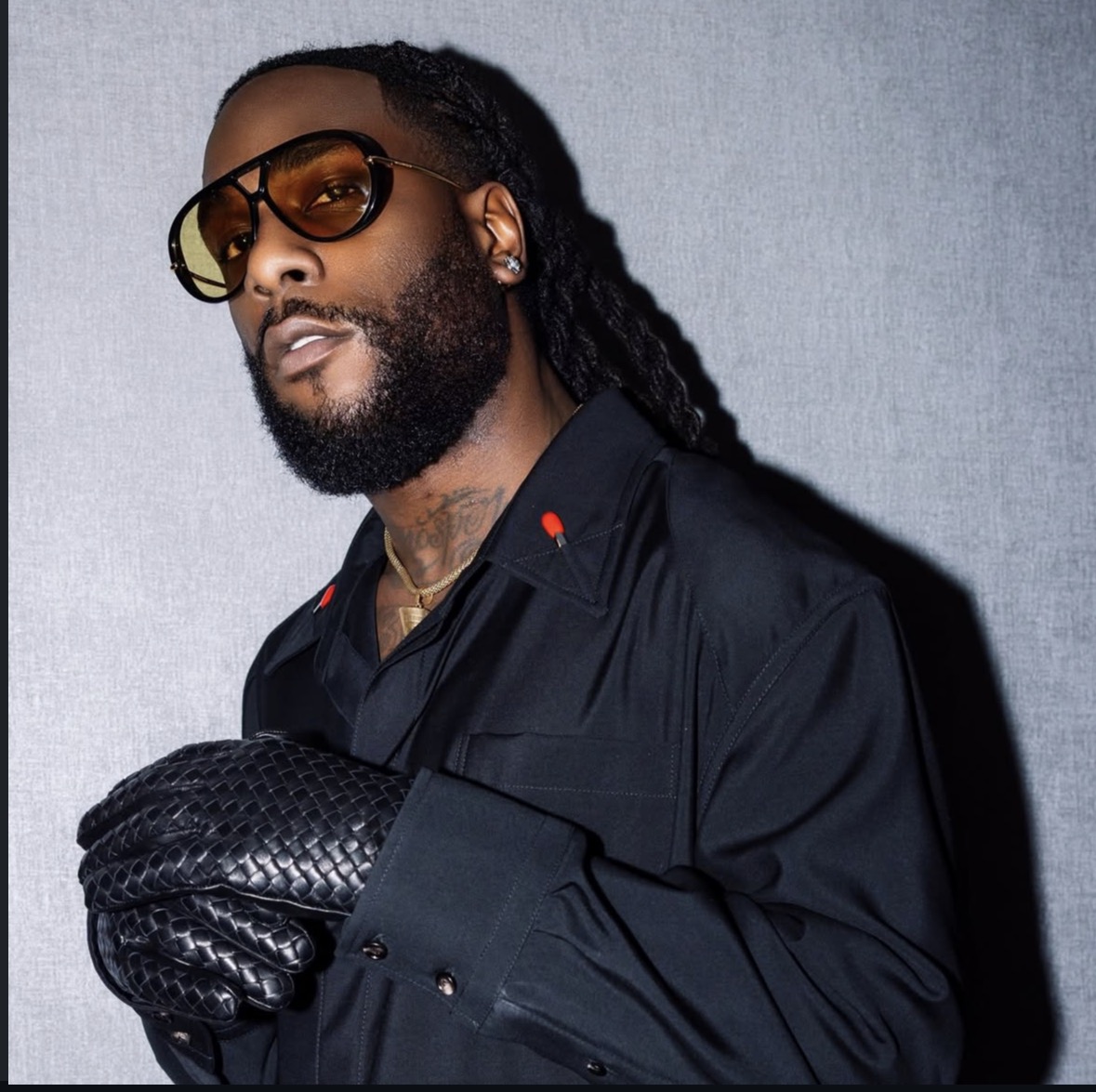
On his successful “No Signs of Weakness” tour, Burna Boy proved that the love in North America remains unconditional.
Music has always been my refuge — the place I return to when words fall short. Music marks my highest moments, when I gather, dance, and feel fully alive with family and friends. Music carries me through quieter seasons when the world feels unsettled.
In my ever-changing life, music has remained constant — not as background noise, but as something deeply human and necessary. Music encapsulates who I am at my core. In every season, no matter the weather, music helps me return to my center. Acclaimed Nobel Laureate author, Toni Morrison once said, “All water has perfect memory and is forever trying to get back to where it was.” Music is water. It’s spiritual.
The first weekend of December had already been a long one for me—the kind that leaves you both exhausted and deeply fulfilled. I traveled to St. Louis on a Thursday and spent a beautiful few days surrounded by family and my closest friends. We were celebrating my (step) mom’s birthday. I felt carefree—dancing, laughing, celebrating—fully present in the joy of being surrounded by my family, accompanied by music.
The moment gently reminded me of my roots and of how pivotal music has been in shaping the world’s culture. We danced to a rich blend of African music—rhumba, soukous, afrobeat, amapiano —mixed with reggae, hip-hop, and sounds from Zambia, the Congo, and the countries in between. Like many African parties, we closed the night with Magic System’s 1er Gaou and Burna Boy’s Last Last. If you know, you know.
I grew up immersed in a fusion of African rhythms. This blend of Afro-fusion shaped my identity. We have always celebrated rhythmically, always returning to our roots. I think it’s the African way. I’m Zambian, and yes, I sometimes generalize when I say African or Africa — not out of ignorance, but with the belief that we are one and Africa’s borders are artificial constructs shaped by colonialism, separation, and conquest.
When Sunday came around, I was tired. Between traveling, planning, and nonstop movement, my body was fatigued—but my spirit was full. On my return to Atlanta, I incurred unexpected weather and long delays but I was not going to give weakness any energy or power.
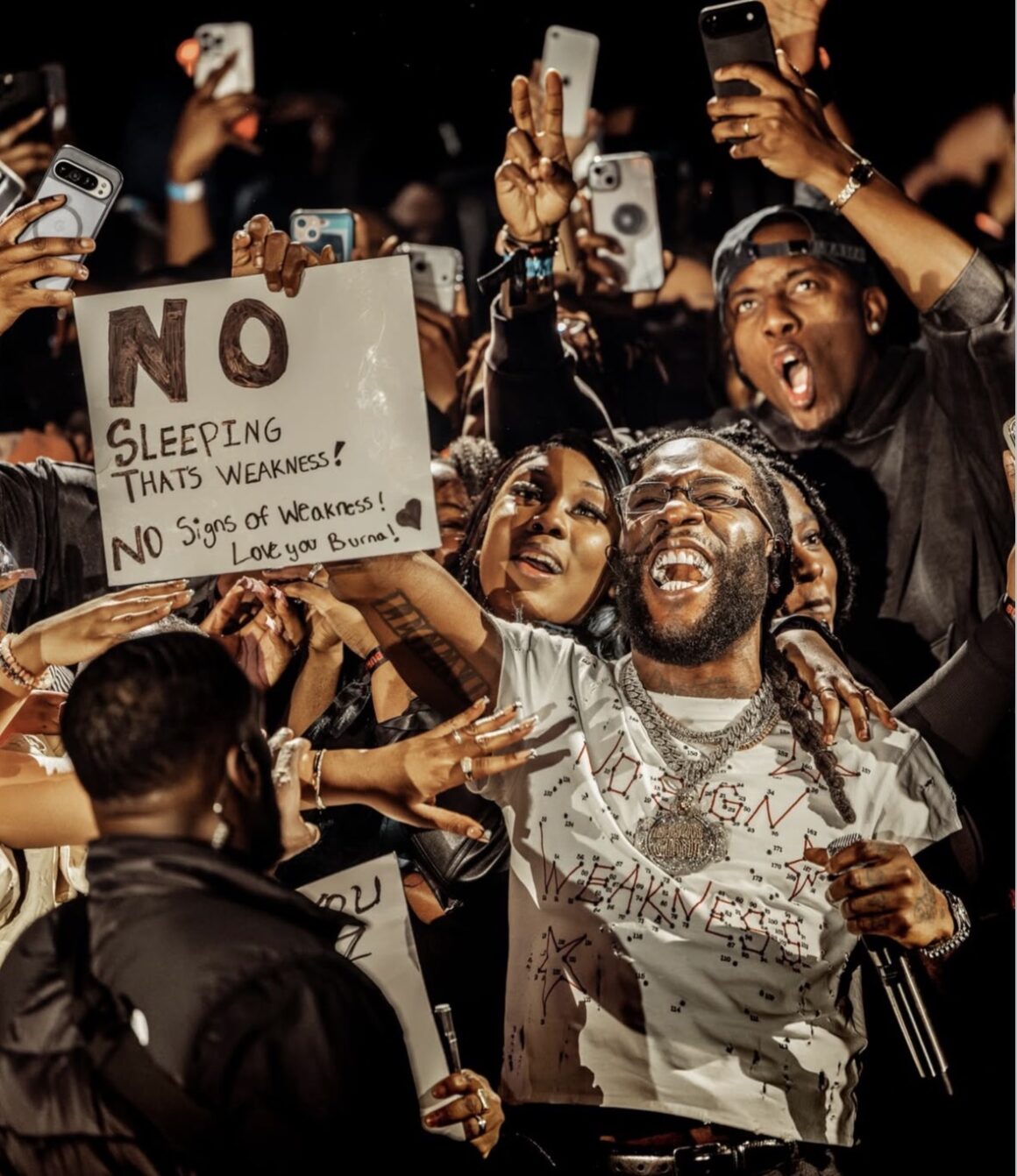
Tell Em Africa We Don Dire, Here Comes the Africant Giant…
On Monday, I was supposed to fly from Atlanta to Abu Dhabi, but the fog at Jackson-Hartsfield Airport had other plans. My plans shifted. Monday was a gloomy day with cumulus clouds overpowering the Atlanta sky. The airport canceled hundreds of flights. I was bummed out and drained. It had been a long year, to say the least. Luckily, the pause made room for what would typically have been part of the plan, catching Burna Boy in concert -at home in ATL.
That evening, not even fatigue and mild stress could keep me from seeing one of our greatest performers of all time—Africa’s son. Burna Boy’s music feels familiar in a way that breeds comfort and ease — it feels like home and acceptance. Burna’s song “Time Flies” with Sauti Sol takes me back to moments with my father. Partially sung in Kiswahili, it feels like a conversation unfolding at the dinner table, as we eat nshima, vegetables, curry beans, and Tilapia.
Burna Boy’s music and visuals have been the soundtrack to many of our lives — a mirror of our culture and a photograph of who we are across our many, layered selves. I have a Burna song for every moment and every memory. We can see ourselves in his work and visuals -unapologetically Black, unapologetically African, unapologetically beautiful, with every shot.
Burna’s music captures our joy and our pain, our wins and losses — the moments when we fall short of our goals or betray ourselves through mistakes, fears, indiscretions; gentle reminders that we are not perfect, may never be, and that this, too, is okay. Perfection is not a prerequisite to being loved because we are only human, after all — and so is Burna.
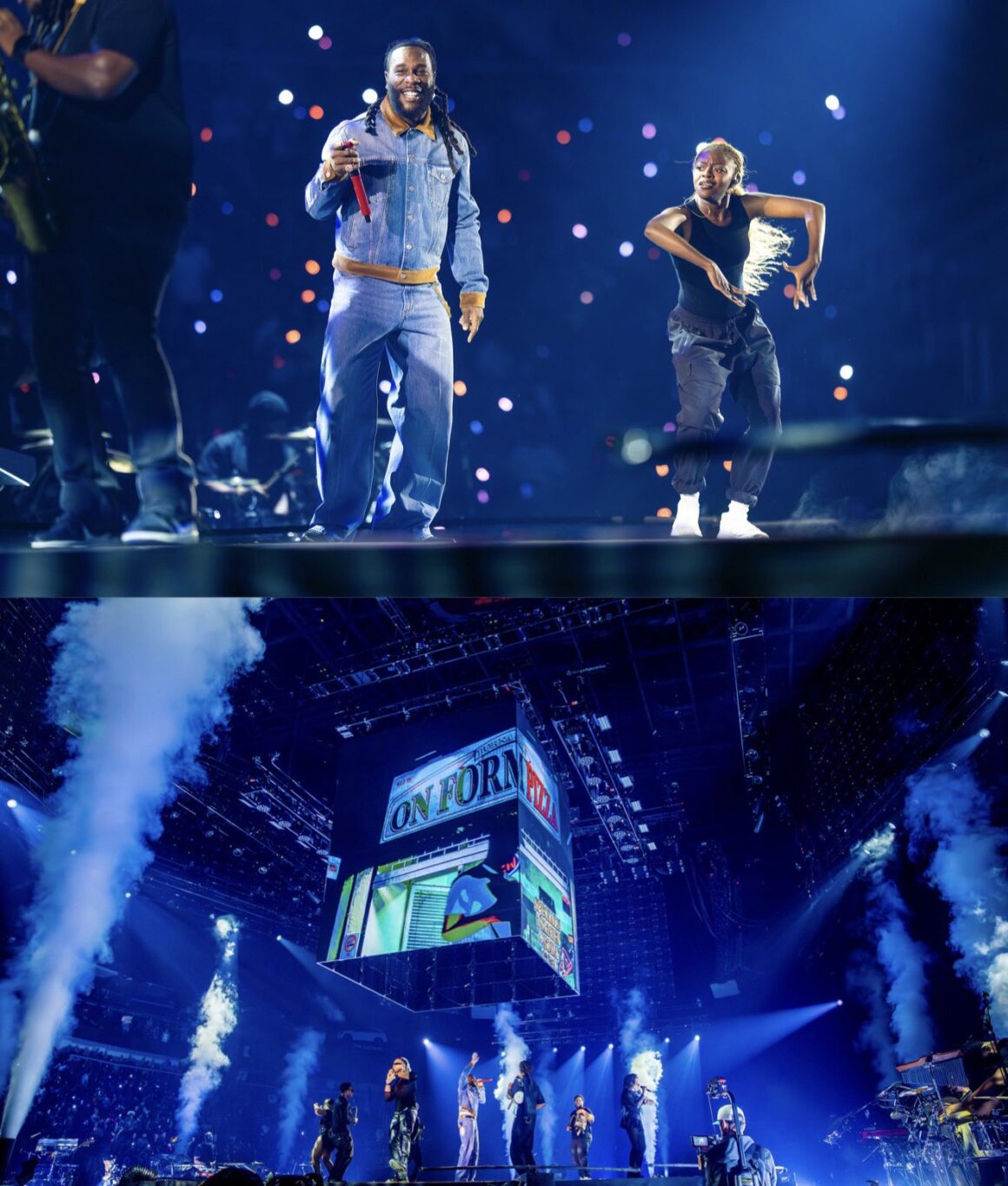
By the time my friend Nehelia and I arrived at State Farm Arena, Atlanta felt awake again and less gloomy. As I walked into the arena, the energy felt euphoric. I could hear Nissi’s captivating voice echoing through the speakers, setting the tone before the night fully began. I grabbed French fries and a drink, taking in the crowd around me. The crowd reflected everything Burna’s music represents—joy, happiness, and freedom—people from different backgrounds, races, accents, and generations moving toward one shared rhythm. Good vibes, good energy.
I had never seen Nissi perform, and that was my most unexpected surprise. Nissi’s mic was on, and her live band accompanied her. Her set felt intimate, even though she was performing to a sold-out crowd. (Maybe it’s because I was happily sitting a couple of rows behind the stage) I liked that.
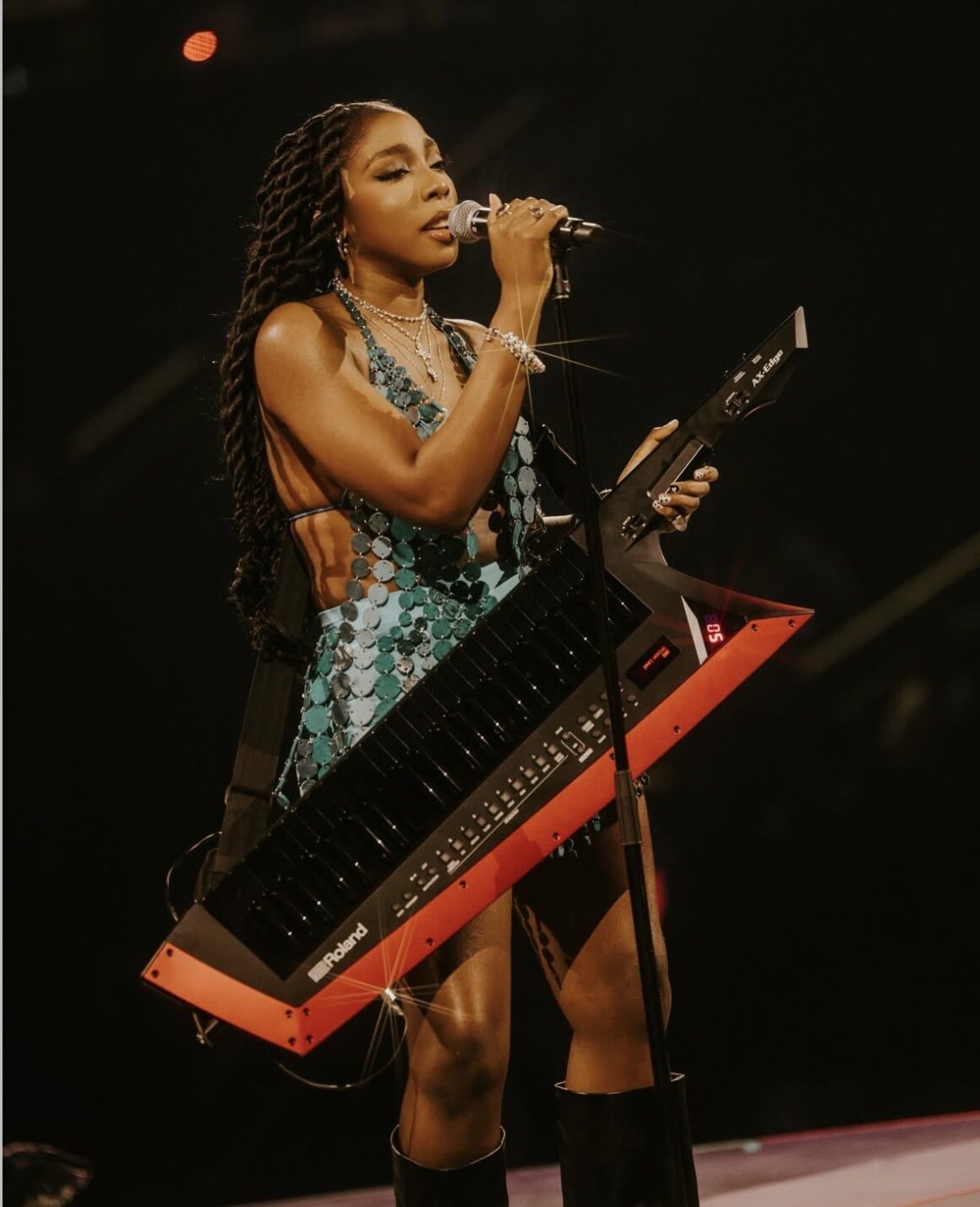
Nissi’s performance was refreshing, raw, and inviting. She moved across the stage like a paintbrush dipped in bold colors, effortlessly drawing the crowd in with her artistry. Her vocals flowed through a rich blend of soulful depth and delicate airiness, fluidly shifting from soft, airy light to bold, commanding strength. Nissi’s music is where Afrobeats, pop, and soul seamlessly intersect into one expressive, living sound. Her songs are a global canvas, experimenting across varied genres. With her keytar strapped around her shoulder, the multi-talented Nigerian songstress blended her own music into a medley of Brandy’s Have You Ever? and Alicia Keys’ Unthinkable. Familiarity always wins. The ATL audience was locked into her performance. Nissi proved she is no beneficiary of nepotism, but rather a gifted artist standing firmly on merit, confidently on the path to global superstardom, on her terms.
The energy intensified as the crowd anticipated Burna’s arrival on stage. The DJ kept everyone on their feet with a mix of reggae and hip-hop, turning the arena into a house party. Then the lights dimmed.
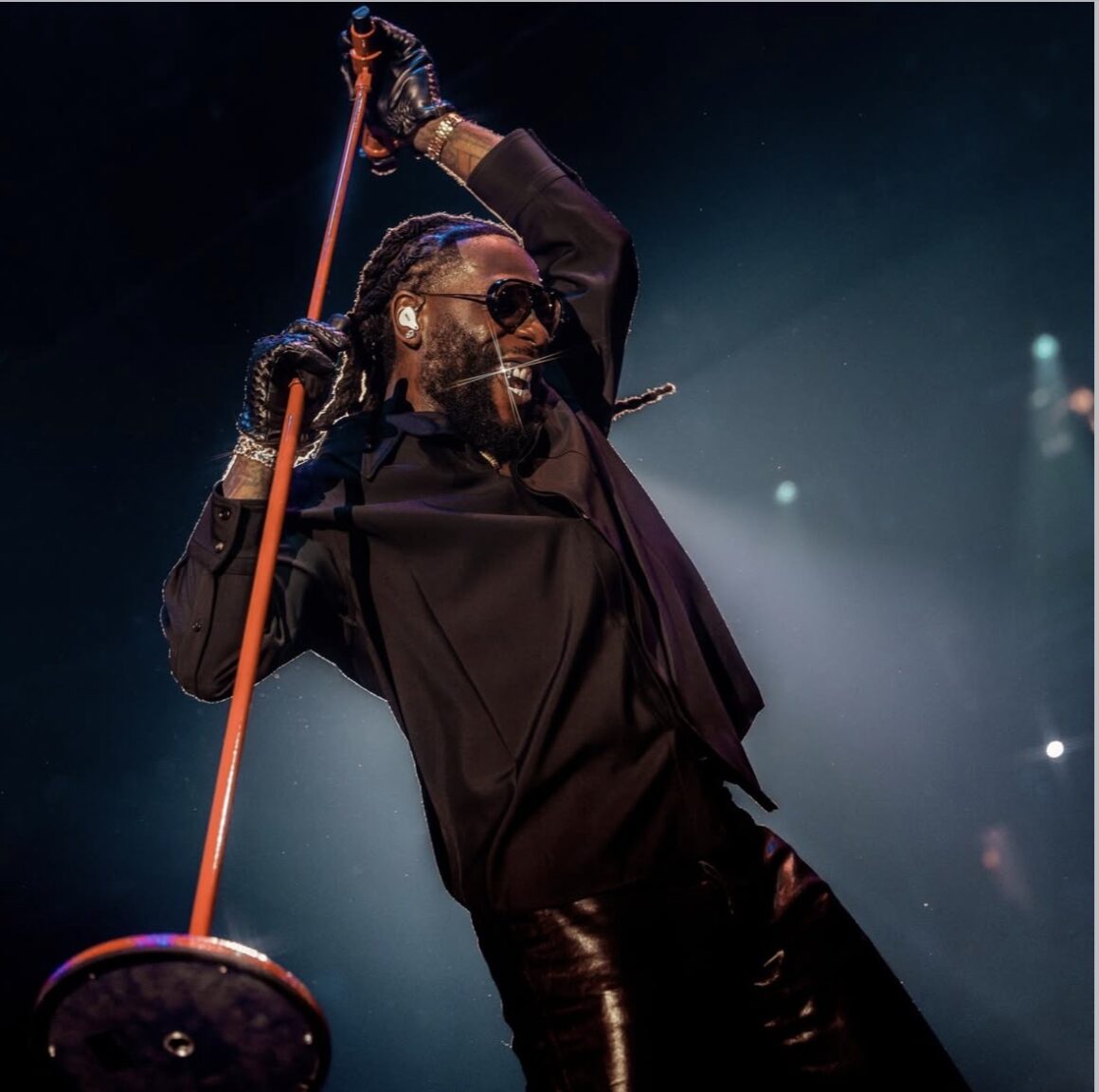
Thick waves of smoke exploded from the stage. Dancers circled the stage in formation. Through the haze, Burna emerged unexpectedly, playing the piano. The crowd went absolutely insane, screaming at the top of their lungs.
Backed by his live band, The Outsiders, Burna moved with intention. This wasn’t just a concert—it felt like an affirmation. If you were sad, angry, or disappointed in life at that moment, those feelings evaporated into joy. Burna didn’t rely on theatrics alone, even though the production was striking. He relied on his massive catalog of hits, musicianship, timing, and presence. Afro-fusion, reggae, hip-hop, and R&B flowed together seamlessly.
I sang along to my favorite songs word for word—(On Form, Ye, It’s Plenty, On the low) even the songs mixed with Pidgin English and Yoruba—and so did the crowd.
Burna’s multilingual approach to his musical career created a quiet but undeniable shift. He moves between Yoruba, Igbo, Pidgin English, and even Kiswahili—and still millions who don’t know the languages sing along word for word. His music is an African blend of many genres and languages. Burna was criticized for saying he did not want to be solely classified as an Afrobeat artist, but his point is valid. His music is more than just Afrobeats; it’s Afro-fusion. Afrobeat, highlife, reggae, dancehall, hip-hop, soul, and more. Beyond this, his sound pays homage to African musicians past and present across multiple genres and generations. It honors the diverse foundations that they’ve built. That lineage you hear in Burna’s songs is intentional and visible. It’s a fusion that can not be erased or flattened into one category of “Afrobeats” to suit the comfort and ignorance of others. No.
You Go Bow For The Result O
Whenever I think of Burna Boy’s career, I’m drawn to both Toni Morrison and James Baldwin’s reflections on owning your identity and remaining whole in a world that resists your fullness.
I always return to a Toni Morrison quote—one that speaks to being rooted in authenticity, and to solitude not as absence, but as the price of remaining whole.
“I stood at the border, stood at the edge, and claimed it as central. I claimed it as central, and let the rest of the world move over to where I was.”
Burna Boy’s rise in North America was not fast or manufactured. It was earned—shaped by self-belief, persistence, and endurance that cannot be erased by viral moments or controversy. It was no easy task,
Burna embraced his authenticity long before it was fashionable or acceptable to be African in American pop culture. I know this because I lived it. It was harsh for many African immigrant kids growing up in America. It may still be challenging in places where differences are not accepted, but a shift has occurred—and music plays an astronomical role in this.
Burna’s visuals broke the distorted narrative of Africa that permeates not just America, but much of the West. Burna was being himself—and, in the process, he cracked an American lens that had misframed Africa for far too long, pushing miseducation rather than truth.
Whether it’s acknowledged or not, Burna’s choice to remain fully, unapologetically African helped loosen a painful xenophobic social construct in North America. From the beginning, he stood at the edge – moving to his own rhythm, dialect, and sound. He never diluted himself to be understood or abandoned his culture to be palatable. He stayed true to himself, claimed the center, and in time, the world followed. He weathered the storm—sometimes carrying the continent on his back, subjecting himself to uncertainty and ignorance in interviews- “do they have this in Africa -do they have that?” -very exhausting. Still, he stayed. Always proud, never ashamed. Always ours.
In the media, Burna has been cast as both hero and, at times, adversary- depending on who’s writing the script. Everyone is entitled to their perspective, but the media is a funny thing because there is always intent behind a narrative or a trending crisis. Sometimes that intent operates on a larger scale than we’re encouraged to see. Sometimes we don’t see the ramifications until generations later.
James Baldwin often argued that America’s simplistic “good guy vs. bad guy” framing is an infantile ideal that prevents people from evolving or questioning intent, and that sometimes going along with the narrative comes at the betrayal of your own identity. In The American Negro, Baldwin touched on the “cowboys versus Indians” narrative, rooted in the good-guy-versus-bad-guy framing. The Indians were always depicted as the villains while the cowboys were the heroes when in truth the (Indians) were Indigenous Native Americans fighting to survive, while resisting violent colonization and extinction.
Upon the self-realization that, as a child, he had been misguided by reframing media, Baldwin said,
“It comes as a great shock to see Gary Cooper (the cowboy) killing off the Indians, and although you are rooting for Gary Cooper, the Indians are you.” -James Baldwin.
Yes, Burna has had controversies and some unfavorable social media moments—but he is still ours, Africa’s son. Impactful. In Burna, we hear Lucky Dube and Youssou N’Dour. We hear Fela Kuti, Koffi Olomidé, and Tshala Muana. We hear Miriam Makeba, Brenda Fassie, Magic System, Ladysmith Black Mambazo, and artists who never got global recognition, awards, or magazine covers. Still, it never mattered because they were always ours. We hear Bob Marley and Buju Banton in Burna’s songs. We hear all of our histories — layered, living, and speaking to one another across time. To me, Burna’s writing lives somewhere between Wole Soyinka, James Baldwin, and maybe Tupac, never limited to just love, enjoyment, or escapism alone. Colonialism, corruption, pollution, state violence, and mental health are all chapters in his music. He confronts the systems that shape everyday life while giving voice to the emotional weight they leave behind. All of this is blended with remnants of highlife and reggae. Afrobeats, soukous, rumba, Kalindula, coupé-décalé, Afro house. It’s all there: our history is presented through melodies and instruments like the djembe, kora, piano, violins, and more.
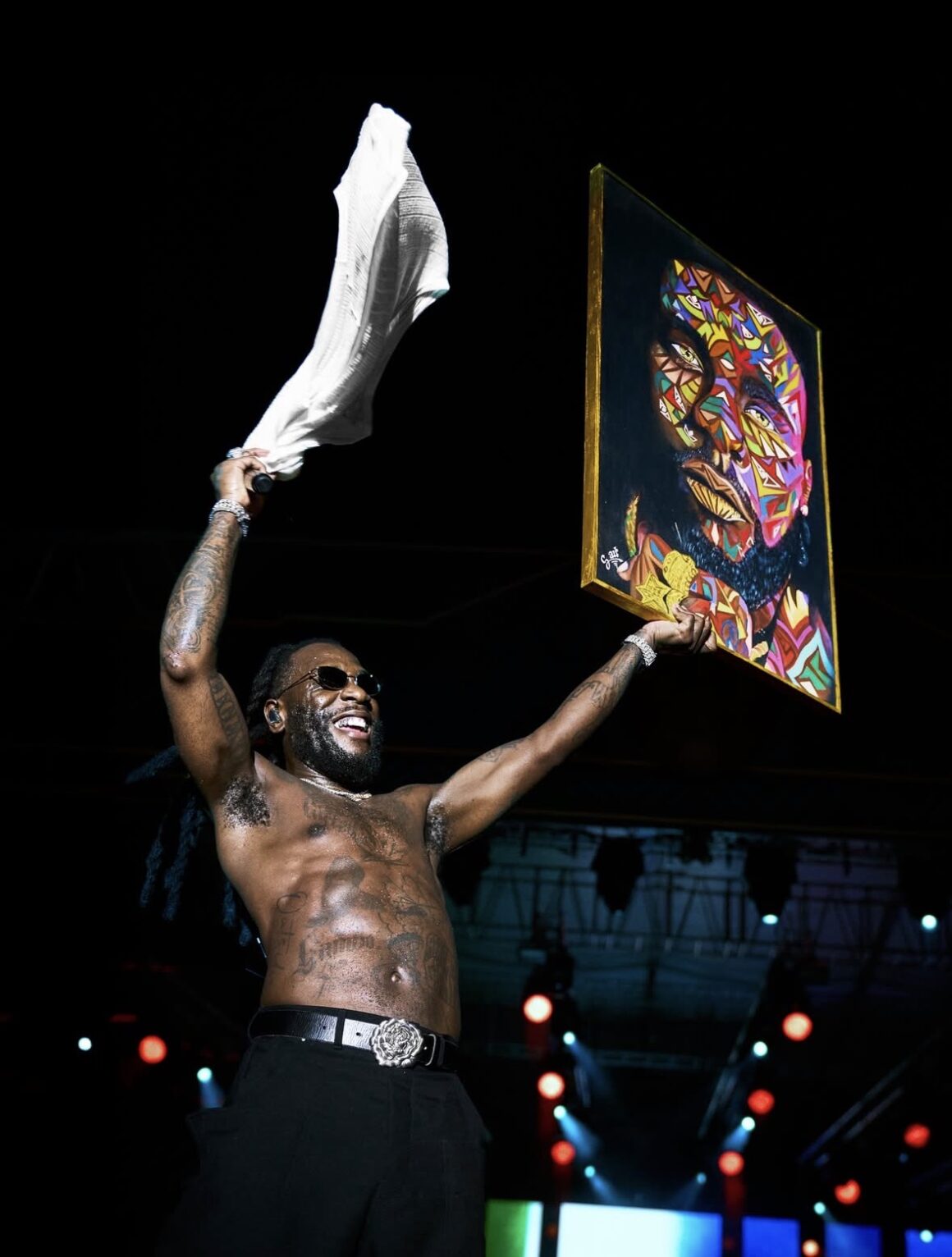
Through veins carved by history and survival, Burna Boy’s music is the heart of our sound, our culture-carrying language, rhythm, and memory, pumping life into our souls and reminding us that our culture is not decoration or a trend to be devoured, dissected, and then discarded. History flows through the melodies, blood echoes through notes. Burna Boy’s music is a life force, and he is ours. He has always been ours—Africa’s son. The African Giant, who stood twice as tall in North America, only to find that the love returned was as unconditional as his own.